
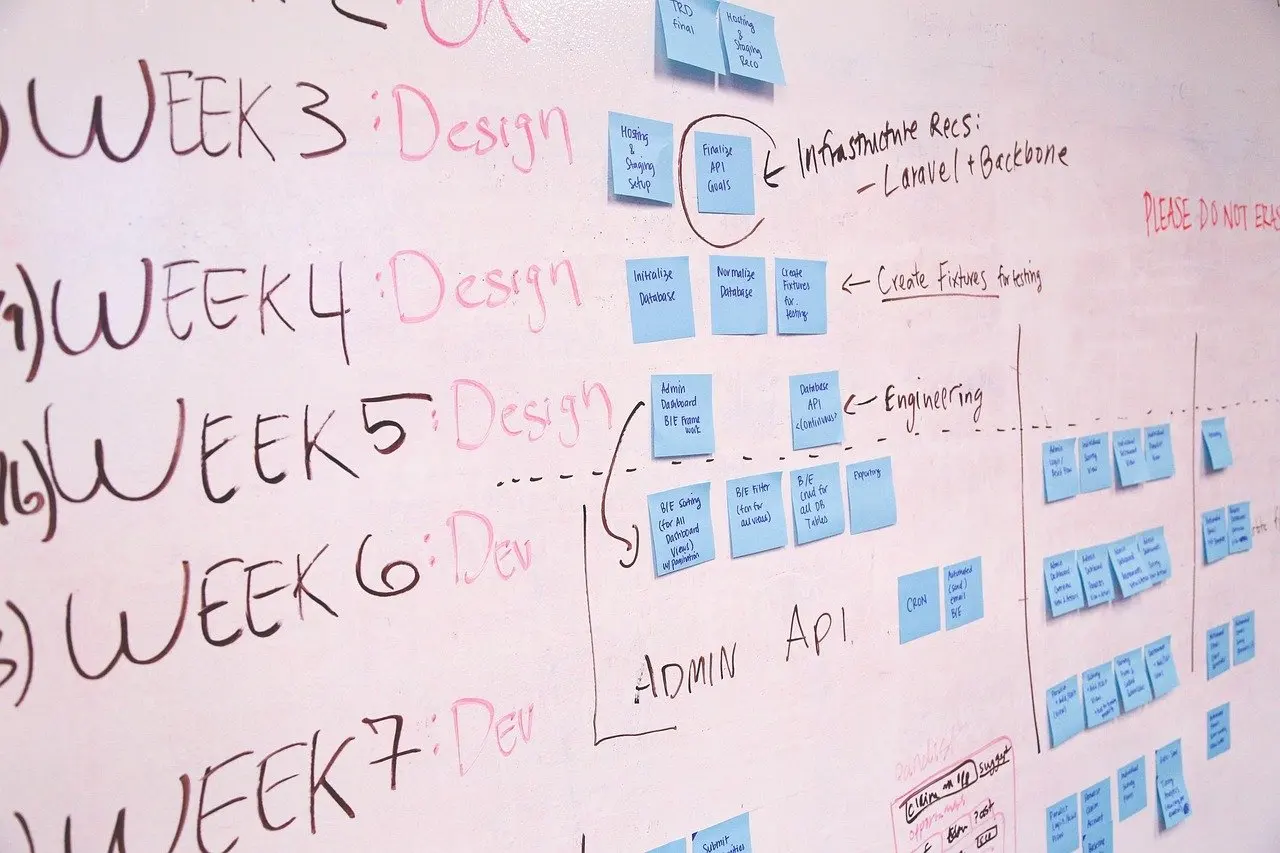
| Upgrade (Ethereum benchmark) | Status and date | Planning use |
|---|---|---|
| The Merge (Paris) | In production, September 15, 2022 | A consensus-level milestone that reduced Ethereum’s energy consumption by about 99.95%. A delivered item like this leaves a dated, checkable record. |
| Shapella | In production, April 12, 2023 | A milestone with a firm production date. Use dated releases as the test for whether a plan became software. |
| Dencun | In production, March 13, 2024 | Added TSTORE and TLOAD opcodes for temporary storage during transaction execution. This matters to smart contract developers working with the Ethereum Virtual Machine. |
| Pectra | In production, May 7, 2025 | Stakers can hold up to 2048 ETH in one validator. A user-facing change like this can be confirmed in client and wallet behaviour. |
| Fusaka | In production, December 3, 2025 | Raised the default gas limit to 60M, increasing L1 execution capacity. |
| Glamsterdam | In development, target Q4 2026 | A target quarter is an intention, not a release. Wait for production status before relying on it. |
| Hegotá | In development, target 2027 | A later target year with scope still open. Treat it as direction only. |
These statuses and dates come from the Ethereum roadmap page on ethereum.org, which is the clearest public model of how a roadmap pairs plans with delivery status.
The Ethersocial roadmap is best read as a list of claims to check against releases, repository history and archived pages, using the upstream Ethereum roadmap as the yardstick for how plans, dates and statuses should be read.
The ethersocial coin overview explains the project itself. For the chronology of what actually happened to it, see the ethersocial history timeline. This page concentrates on one narrower job: separating what was planned from what can be shown to exist.
What a roadmap promises and how to judge it
A roadmap promise has three parts: a deliverable, a position in the sequence and a target date. Each part can fail independently. A feature can ship late, ship in a different order, or never ship at all.
That makes the practical decision simple. Treat every Ethersocial roadmap line, whether it appears under the label ethersocial development plan or ethersocial ESN roadmap, as unproven until a public artefact backs it. The Ethereum table above shows the standard to apply. Each delivered upgrade carries a production date, and each unfinished one is labelled as in development with only a target quarter or year.
- Check the deliverable. A named feature, such as a wallet or explorer, is easier to verify than a general aim. Vague aims cannot be marked as delivered.
- Check the order. Ethereum’s own list runs from the Merge through Shapella, Dencun, Pectra and Fusaka before reaching the items still in development. A roadmap whose later items shipped before earlier ones has been reordered, and that is worth noting.
- Check the date. A target quarter such as Q4 2026 is a plan. Only a production date shows that something happened.
The ethersocial whitepaper describes how the system was meant to work. The roadmap is a separate document about sequencing, so the two should not be merged when judging delivery.
Order of milestones: what sequencing tells you
Sequencing shows what a project treated as foundational. On Ethereum’s roadmap, consensus and energy change came first, and execution capacity came later. The Merge reduced energy consumption by about 99.95%, and Fusaka later raised the default gas limit to 60M, according to the ethereum.org roadmap.
Ethereum-based coins sit downstream of this kind of change because they rely on the same smart contract model and the Ethereum Virtual Machine. When Dencun added TSTORE and TLOAD opcodes for temporary storage during transaction execution, that was an EVM-level feature. A project that builds on EVM tooling should read any milestone about contracts against what the tooling actually supports.

Fixed dates versus target windows
Ethereum’s page separates items already in production from items in development. The first group has exact dates and the second has only a quarter or year. A roadmap that gives exact future dates for everything deserves more caution than one that uses windows, since exact dates are the first thing to slip.
Scope that stays open
The same page states that scope is not final: the changes scheduled so far are listed, and dozens more have been proposed. Reading an archived roadmap as a complete contract therefore overstates what it was. It was a list of changes planned at one moment.

Evidence of delivery: code, wallets and explorers
Delivery evidence comes in layers. The strongest is a released artefact that anyone can use. The next is repository history showing work in progress. The weakest is an announcement.

Repository history
Commit history shows whether a milestone was being built, and when work stopped. It cannot show that a milestone shipped, because code in a repository is not the same as a release. Match each roadmap line to a tagged release or a published build wherever one exists, and treat bare commits as partial progress only.
Wallets
A wallet is the most visible kind of roadmap deliverable, and it is also easy to overstate. Ethereum’s own roadmap describes account abstraction as a class of upgrades that support smart contract wallets natively. That is a protocol-level goal, not a wallet product. Even among tooling projects, labels vary: the code repository for the Kohaku wallet SDK warns that parts are not ready for production use, as COTI’s overview of Ethereum privacy plans notes. A wallet named on a roadmap counts as delivered only when a usable build exists, not when a repository does.

Explorers and other public services
An explorer is delivered if a working public site indexes the chain and can be loaded. Web archive snapshots help here, since they show whether a service ever appeared on a given date. A snapshot proves existence at that moment and nothing beyond it.
When a milestone is dropped
Some items are formally declined rather than quietly missed. COTI reports that core developers declined to include EIP-8182 private transfers in Hegotá on September 10, 2026. A declined item should be marked as not delivered and not as delayed, which is a different outcome for anyone who planned around it.
Why a roadmap stops being updated
A roadmap stops being updated when the work it tracked stops, or when its owners stop treating it as the planning document. Ethereum shows the healthy version of this. Its page says the roadmap is expected to change as new information and technology become available, and that exact timing is hard to predict, with some lower-priority upgrades likely not to be implemented for the next 5-10 years.
Even a well-staffed project revises constantly. The Ethereum Foundation’s 2026 Strawmap, published in February 2026, was described by Fidelity Digital Assets as not a formal roadmap but a coordination tool. Its objectives include reducing slot times from 12 seconds to as little as 2 to 3 seconds, and moving from 5 million gas per second to one billion. Achieving that would require an L1 zk-EVM, according to the same analysis.
Timelines are also contested within active projects. The Cryptonomist reported that several prominent voices called a proposed 3-4 year timeline far too slow, and Dankrad Feist argued for getting it done in about 1 year. A document that nobody debates or revises is more likely to reflect a stalled effort than a settled plan.
How to treat a frozen roadmap
- Use it as a record of intent. A roadmap that is no longer revised shows what was planned at the time it was last edited. It does not describe the current state of the project.
- Rely on dated evidence. Releases, tagged code and archived pages outrank the roadmap text wherever they disagree.
- Avoid planning around open items. If an item is marked as upcoming in a document that is no longer maintained, assume it has not shipped until a release proves otherwise.
Frequently asked questions
Why is the Ethersocial roadmap not updated?
Roadmaps are updated by the people who maintain the work. Active projects such as Ethereum revise theirs as information changes, so a document left unchanged usually signals that planning has moved elsewhere or stopped.
Which milestones count as delivered?
Only those backed by a public artefact: a usable wallet build, a working explorer, a tagged release or a dated archive snapshot. Repository commits alone show progress, not delivery.
In what order does Ethereum’s own roadmap run?
Its listed production upgrades run from the Merge in September 2022 through Shapella, Dencun, Pectra and Fusaka. Glamsterdam and Hegotá remain in development.
Is a target date a commitment?
No. Ethereum’s page states that exact timing is difficult to predict and that scope is not final. A target is an intention until a production date exists.